乐单
曲目
第 1 张 · 12" Vinyl
- A1Paperhouse7:28
- A2Mushroom4:03
- A3Oh Yeah7:22
- BHalleluhwah18:30
第 2 张 · 12" Vinyl
- CAumgn17:29
- D1Peking O.11:36
- D2Bring Me Coffee or Tea6:46
7 首 · 约 73 分钟 · 依据 1971 GB 发行的版本,在 MusicBrainz 看这个版本。
介绍
这个词条没有中文维基百科条目,下面是英文维基百科的原文。
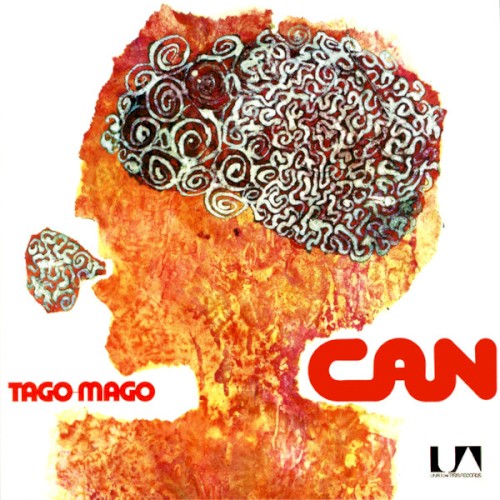
Tago Mago is the second studio album by the German Krautrock band Can, released in August 1971 as a double LP by United Artists Records. It was the band's first full album to include vocalist Damo Suzuki after the departure of Malcolm Mooney the year prior, though Suzuki had appeared on most tracks on the 1970 compilation album Soundtracks. Tago Mago was recorded between November 1970 and February 1971 at the Can Studio in the Schloss Nörvenich, a medieval castle near Cologne.
Tago Mago contains long-form tracks blending rock improvisation, funk rhythms, and musique concrète tape editing techniques. The album has been described as Can's best and most extreme record in sound and structure. The album has received widespread critical acclaim and is cited as an influence by various artists. Ned Raggett of AllMusic calls it "not merely one of the best Krautrock albums of all time, but one of the best albums ever, period."
Background
After Malcolm Mooney left Can in December 1969, the band was left without a vocalist. While visiting Munich for a performance in early 1970, bassist Holger Czukay and drummer Jaki Liebezeit saw Kenji "Damo" Suzuki busking outside a cafe and invited him to perform with them. Suzuki performed with the band at the Blow Up Club that evening, and subsequently joined the group.
Early in 1968, the band had been invited to stay for one year rent-free at the Schloss Nörvenich, a medieval castle in Nörvenich, North Rhine-Westphalia, by art collector Christoph Vohwinkel, who had rented it with the idea of transforming it into an art center. Tago Mago was recorded by Czukay at the castle between November 1970 and February 1971.
During the sessions, Can were visited by English journalist Duncan Fallowell of The Spectator. In 1970, he published the first mainstream column about the band.
Production and recording
The recording process took three months to complete. Sessions often lasted up to 16 hours a day, with Czukay editing the band's long jams into structured songs. He used a pair of two-track tape recorders to capture the sessions, which limited the band. The group favored recording in the castle's entrance hall to take advantage of its natural reverberation. Czukay used only three microphones to capture the sessions, two of them shared between Suzuki and Liebezeit and the third carefully placed in the center of the studio. Because they did not have a mixing console or a separate recording engineer, the band gathered closer to the microphones and tried to balance their levels on the fly. Czukay said that "if anyone had moved, it would've destroyed the recording. Keyboardist Irmin Schmidt experimented with oscillators in place of typical synthesizers on "Aumgn."
Tago Mago was the first Can album to contain "in-between" recordings, for which Czukay secretly recorded the band jamming during pre-production sessions. He also captured recordings of the shouts of a child who mistakenly entered the room during recording, as well as the howling of Christoph Vohwinkel's dog.
Name
According to Czukay, the album was named after Illa de Tagomago, an islet near Ibiza in the Balearic archipelago, at Liebezeit's suggestion.
Music
Tago Mago is a double album, with the first LP more conventionally-structured and the second more experimental. Roni Sarig, author of The Secret History of Rock, called the second LP "as close as [the group] ever got to avant-garde noise music". The vocals have a subtler presence on Tago Mago as a result of the replacement of the dominant presence of Malcolm Mooney, the band's first vocalist, with Damo Suzuki. Czukay described Mooney as a "driving locomotive", stating that the band "had to follow him; couldn't stand behind him". Suzuki, by contrast, "needed a group which was pushing him."
Tago Mago draws inspiration from such sources as jazz musicians such as Miles Davis and electronic avant-garde composers such as Karlheinz Stockhausen, under whom Czukay and Schmidt had studied. The album was also inspired by the work of English occultist Aleister Crowley; it is named for Illa de Tagomago, an island that features in the Crowley legend, and the track "Aumgn" is named for Crowley's interpretation of the Hindu mantra syllable Om. In 2008, Czukay described the album as "an attempt in achieving a mystery musical world from light to darkness and return". The group has referred to the album as their "magic record," and the music has been described as having an "air of mystery and forbidden secrets."
正文摘自英文维基百科「Tago Mago」,按 CC BY-SA 4.0 使用;删去了参考文献、外部链接、表格和图片;篇幅所限只节选了前面一部分,全文见原条目。
资料卡
- 作品性质
- 音乐专辑
- 表演者
- 罐头
- 发行日期
- 1971 年 8 月
- 流派
- 德国摇滚、实验摇滚、前卫的士高、迷幻摇滚
- 语言
- 英语
- 唱片公司
- 联美唱片公司
- 制作人
- 罐头
资料来自 Wikidata Q929039(CC0)。
制作名单
- 厂牌
- United Artists(目录号 UAD 60009)、United Artists(目录号 UAD 60010)
- 录音室
- 录音:Schloss Nörvenich(Nörvenich)
制作
- 剪辑
- 霍尔格·克苏卡伊
- 工程师
- 霍尔格·克苏卡伊
演奏与演唱
- 贝斯
- 霍尔格·克苏卡伊
- 吉他
- Michael Karoli
- 鼓
- Jaki Liebezeit
- 键盘
- Irmin Schmidt
- 电钢琴
- Irmin Schmidt
- 电子琴
- Irmin Schmidt
- 演唱
- Damo Suzuki
- 鼓类乐器
- Jaki Liebezeit(第 A1、D1 首)
词曲与编曲
- 作曲
- 霍尔格·克苏卡伊、Michael Karoli、Jaki Liebezeit、Irmin Schmidt、Damo Suzuki
- 作词
- 霍尔格·克苏卡伊、Michael Karoli、Jaki Liebezeit、Irmin Schmidt、Damo Suzuki
- 词曲
- 罐头(第 B 首)
名单来自 MusicBrainz(CC0)这一发行版本的关系数据,由志愿者录入,不一定齐全。
更多资料与乐评
在哪听
罐头 的其他专辑
艺人页 ›



相似的专辑






同在 1971 年发行