乐单
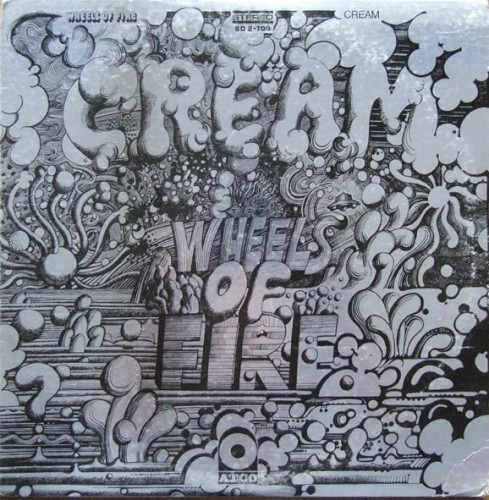
火轮 (1968)
- 艺人
- Cream
- 发行
- 1968-06-14
- 类型
- 专辑
- 唱片公司
- 阿特科、宝丽多唱片公司
- 制作人
- 菲利克斯·帕帕拉帝
- 版本
- MusicBrainz 上有 33 个发行版本
曲目
第 1 张 · 12" Vinyl · In the Studio
- 1White Room5:03
- 2Sitting on Top of the World5:01
- 3Passing the Time4:37
- 4As You Said4:23
- 5Pressed Rat and Warthog3:18
- 6Politician4:17
- 7Those Were the Days2:57
- 8Born Under a Bad Sign3:14
- 9Deserted Cities of the Heart3:38
第 2 张 · 12" Vinyl · Live at the Fillmore
- 1Crossroads4:18
- 2Spoonful16:47
- 3Traintime7:02
- 4Toad16:16
13 首 · 约 81 分钟 · 依据 1968-06-14 US 发行的版本,在 MusicBrainz 看这个版本。
介绍
这个词条没有中文维基百科条目,下面是英文维基百科的原文。
Wheels of Fire is the third album by the British rock band Cream. It was released in the US on 14 June 1968 as a two-disc vinyl LP, with one disc recorded in the studio and the other recorded live. It was released in the UK in the same format on August 9.
Background and recording
Cream's third album was planned to be a double album which would include several live performances. Unlike Disraeli Gears, which had been recorded in a matter of days, the Wheels of Fire sessions took place in small bursts over nearly a year. The recording engineers on disc one were Tom Dowd and Adrian Barber. The live performances on disc two were recorded by Bill Halverson and mixed by Adrian Barber.
Sessions with producer Felix Pappalardi began in July and August 1967 at IBC Studios in London, months before the release of Disraeli Gears, with the basic tracks for "White Room", "Sitting on Top of the World", and "Born Under a Bad Sign" put to tape. Jack Bruce expressed the band's preference for working with Pappalardi and Dowd, as well as the new unhurried atmosphere contrasted with the first two albums: "We're all temperamental but Tom...and Felix manage to get rid of that temperament...We spend a long time in the studio, so we don't have to rush. We usually talk for hours before we record anything, then we play, think and add sounds". Recordings continued with short sessions at Atlantic Studios in September and October 1967 where overdubs were added to the aforementioned three songs along with basic tracks for "Pressed Rat and Warthog" and the non-LP single "Anyone for Tennis". After more overdubs in mid-December, further work took place at Atlantic from 13–22 February 1968, during a break from the band's heavy tour schedule, where basic tracks for "Politician", "Passing The Time", "Deserted Cities of the Heart" and "As You Said" were laid down along with further work on the previous tracks.
The following month, Pappalardi ordered that a mobile recording studio in Los Angeles be shipped to The Fillmore Auditorium and Winterland Ballroom in San Francisco. Six shows were recorded at both venues from 7–10 March by Pappalardi and recording engineer Bill Halverson, with extra performances not included on Wheels of Fire ending up on Live Cream and Live Cream Volume II. Further recordings and mixing for the album were completed at Atlantic Studios in June 1968, nearly a year after they had started, with the completion of "White Room", "Passing the Time", "Deserted Cities of the Heart", "As You Said" and the recording of a final number, "Those Were the Days". By this point, recording at the end of two exhausting back-to-back tours of America, tensions between the band members had become considerably strained. The album was then rushed to shops in the US by mid-June.
Composition and music
The band's drummer Ginger Baker co-wrote three songs for the album ("Passing the Time", "Pressed Rat and Warthog", and "Those Were the Days") with jazz pianist Mike Taylor. Baker later admitted that "Pressed Rat and Warthog" was an inside joke, based on the bawdy imagery referred to by its title. Bassist Jack Bruce co-wrote four songs with poet Pete Brown including "White Room", "As You Said" (the only Cream recording which does not feature Clapton), "Politician" and "Deserted Cities of the Heart". In an interview, Pete Brown revealed that the lyrics to "White Room" were condensed from an eight page poem he had written when he moved into a new white-walled apartment room with bare furnishings, where he gave up drinking and drugs. "Politician" came together quickly for a January 1968 BBC radio session when, needing one more track, Bruce came up with a riff which Brown, who was present in the studio, thought was perfect to match with lines of a poem he'd written several years earlier; the song was finished and recorded for broadcast that day. Guitarist Eric Clapton contributed to the album by choosing two blues songs to cover, the standard "Sitting on Top of the World" and Booker T. Jones's "Born Under a Bad Sign", which had been the title track to the recent Albert King album of the same name. Production on the studio disc was more elaborate than that for the first two albums, with the addition of exotic instrumentation including glockenspiel, calliope, cello, trumpet, bells, viola and tonette creating a psychedelic feel, with the three blues numbers featuring the group's basic three piece sound.
For the second disc, Felix Pappalardi chose "Traintime" because it featured Jack Bruce's singing and harmonica playing, "Toad" because it featured Ginger Baker's lengthy drum solo, while "Spoonful" and "Crossroads" were used to showcase Eric Clapton's guitar work. All four songs had been a part of their set list since the band's beginnings in 1966, as shown by several early BBC performances.
正文摘自英文维基百科「Wheels of Fire」,按 CC BY-SA 4.0 使用;删去了参考文献、外部链接、表格和图片;篇幅所限只节选了前面一部分,全文见原条目。
资料卡
- 作品性质
- 音乐专辑
- 表演者
- Cream
- 发行日期
- 1968 年 6 月 14 日
- 时长
- 1 小时 24 分
- 流派
- 蓝调摇滚
- 语言
- 英语
- 唱片公司
- 阿特科、宝丽多唱片公司
- 制作人
- 菲利克斯·帕帕拉帝
资料来自 Wikidata Q902413(CC0)。
制作名单
- 厂牌
- ATCO Records(目录号 SD 2-700)
- 录音室
- 录音:IBC Studios(London);录音:Atlantic Studios(Midtown Manhattan);录音:Winterland Ballroom(San Francisco);录音:The Fillmore Auditorium(San Francisco)
制作
- 工程师
- Adrian Barber(其中 9 首)、Tom Dowd(其中 9 首)、Bill Halverson(第 4 首)
- 制作人
- Felix Pappalardi(其中 9 首)
- 录音
- Adrian Barber(其中 9 首)、Tom Dowd(其中 9 首)、Bill Halverson(第 1、2、3 首)
演奏与演唱
- 贝斯
- 杰克·布鲁斯(其中 9 首)
- 鼓
- Ginger Baker(其中 9 首)
- 吉他
- 埃里克·克莱普顿(其中 7 首)
- 演唱
- 杰克·布鲁斯(其中 7 首)、埃里克·克莱普顿(第 3、7、1 首)、Ginger Baker(第 3 首)
- 电吉他
- 埃里克·克莱普顿(第 1、2、4 首)
- 中提琴
- Felix Pappalardi(第 1、9 首)
- 主唱
- 杰克·布鲁斯(第 3、7 首)
- 原声吉他
- 杰克·布鲁斯(第 4、9 首)
- 大提琴
- 杰克·布鲁斯(第 4、9 首)
- 打击乐
- Ginger Baker(第 1 首)
- 定音鼓
- Ginger Baker(第 1 首)
- 鼓类乐器
- Ginger Baker(第 3 首)
- 钟琴
- Ginger Baker(第 3 首)
- calliope
- 杰克·布鲁斯(第 3 首)
- 吉他类
- 埃里克·克莱普顿(第 3 首)
- 风琴
- Felix Pappalardi(第 3 首)
- 踩镲
- Ginger Baker(第 4 首)
- 竖笛
- 杰克·布鲁斯(第 5 首)
- 小号
- Felix Pappalardi(第 5 首)
- 长笛
- Felix Pappalardi(第 5 首)
- 念白
- Ginger Baker(第 5 首)
- 马林巴
- Ginger Baker(第 7 首)
- 管钟
- Ginger Baker(第 7 首)
- handbell
- Felix Pappalardi(第 7 首)
- 铃鼓
- Ginger Baker(第 8 首)
- 电贝斯
- 杰克·布鲁斯(第 1 首)
- 口琴
- 杰克·布鲁斯(第 3 首)
词曲与编曲
- 词曲
- Ginger Baker(第 3、5、7 首)、Mike Taylor(第 3、5、7 首)、Pete Brown(第 1 首)、杰克·布鲁斯(第 1 首)、John Group(第 3 首)
- 作曲
- 杰克·布鲁斯(第 4、6、9 首)、咆哮之狼(第 2 首)、布克尔·T·琼斯(第 8 首)、罗伯特·约翰逊(第 1 首)、威利·迪克森(第 2 首)、Ginger Baker(第 4 首)
- 作词
- Pete Brown(第 4、6、9 首)、咆哮之狼(第 2 首)、威廉·贝尔(第 8 首)、罗伯特·约翰逊(第 1 首)、威利·迪克森(第 2 首)
包装与设计
- 封面艺术
- Martin Sharp
- 设计
- Stanislaw Zagorski
名单来自 MusicBrainz(CC0)这一发行版本的关系数据,由志愿者录入,不一定齐全。
更多资料与乐评
在哪听
Cream 的其他专辑
艺人页 ›
相似的专辑
同在 1968 年发行