乐单
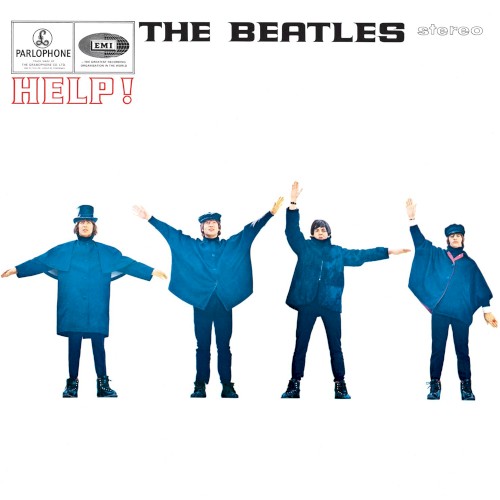
Help! (1965)
滚石 500(2020) #266滚石 500(2003) #332
- 艺人
- 披头士乐队
- 发行
- 1965-08-06
- 类型
- 专辑
- 唱片公司
- Parlophone
- 制作人
- 乔治·马丁
- 版本
- MusicBrainz 上有 80 个发行版本
曲目
- 1Help!2:19
- 2The Night Before2:35
- 3You’ve Got to Hide Your Love Away2:09
- 4I Need You2:29
- 5Another Girl2:05
- 6You’re Going to Lose That Girl2:19
- 7Ticket to Ride3:10
- 8Act Naturally2:30
- 9It’s Only Love1:56
- 10You Like Me Too Much2:37
- 11Tell Me What You See2:38
- 12I’ve Just Seen a Face2:05
- 13Yesterday2:06
- 14Dizzy Miss Lizzy2:55
14 首 · 约 34 分钟 · 依据 1965-08-06 US 发行的版本,在 MusicBrainz 看这个版本。
介绍
《Help!》是英国摇滚乐队披头士,于1965年8月6日推出的第五张专辑,也是乐队在北美推出的第十张专辑(同名电影《Help!》的原声大碟)。音乐监制乔治·马丁,为EMI旗下唱片公司Parlophone所录制。内容包括原本英国版的十四首歌曲,其中七首为电影歌曲 - 这些歌放在唱片的第一面,包括单曲《Help!》和《Ticket to Ride》;第二面则载有其他七首歌,包括有史以来翻唱版本最多的歌曲 - 《Yesterday》。
原声音乐
于美国发行的是真正的原声音乐专辑,共有十二首歌曲,其中五首是电影配乐;而其他七首英国版的歌曲,有两首会放在美版的《Rubber Soul》专辑,另有两首歌曲以细碟形式在美国发行,而后来会出现在《Yesterday and Today》专辑,及余下三首歌已放在《Beatles VI》专辑内。
同名电影《Help!》,在德语地区的电影院放映时以《Hi-Hi-Hilfe!》作为标题。
唱片成绩
2012年,《滚石杂志》的“史上最伟大五百张专辑”名单把这专辑列在第331位。2013年,英国唱片业协会改变了他们的销售奖励规则,宣布这张专辑已经达到白金销量。
发行激光唱片
1987年4月30日,《Help!》专辑正式发行立体声CD版。以往这个专辑在美国只有进口版;1987年7月21日,唱片及卡式录音带亦都在美国国内发行。2009年9月9日,它连同披头士其他的经典大碟,经过重新混音后,再度推出市面。这次发行的有立体声和单声道CD两个版本。
正文摘自中文维基百科「救命!」,按 CC BY-SA 4.0 使用;已转为简体,删去了参考文献、外部链接、表格和图片。
英文维基百科上的更多内容(英文原文,约 3,402 字符)
Help! is the fifth studio album by the English rock band the Beatles and the soundtrack to the film Help!. It was released on 6 August 1965 by Parlophone. Seven of the fourteen songs, including the singles "Help!" and "Ticket to Ride", appeared in the film and take up the first side of the vinyl album. The second side includes "Yesterday", the most-covered song ever written. The album was met with favourable critical reviews and topped the Australian, German, British and American charts.
During the recording sessions for the album, the Beatles continued to explore the studio's multitracking capabilities to layer their sound. "Yesterday" features a string quartet, the band's first use of Baroque sensibilities, and "You've Got to Hide Your Love Away" includes a flute section. The North American release is a true soundtrack album, combining the first seven songs with instrumental music from the film. The omitted tracks are instead spread across the Capitol Records LPs Beatles VI, Rubber Soul and Yesterday and Today.
In the US, Help! marked the start of artistic recognition for the Beatles from mainstream critics, including comparisons to the European art music tradition. It was nominated in the category of Album of the Year at the 1966 Grammys Awards, marking the first time that a rock band had been recognised in this category. In 2000, it was voted 119th in the third edition of Colin Larkin's book All Time Top 1000 Albums. In 2020, it was ranked 266th on Rolling Stone magazine's list of the "500 Greatest Albums of All Time". In September 2013, after the British Phonographic Industry changed its sales award rules, Help! was certified platinum for recorded sales since 1994.
Background
In 1964, the Beatles appeared in their first feature film, A Hard Day's Night. Despite initial scepticism, reviews were near universal in their acclaim, elevating the Beatles' prestige as artists. Intending to make one film a year, work began on a second Beatles picture for a 1965 release. It would once again be directed by Richard Lester and produced by Walter Shenson, but written by Marc Behm and Charles Wood instead of Alun Owen. It was given the working title Eight Arms to Hold You, one of Ringo Starr's "Ringoisms"; the name stuck until early April, long enough to even appear on the US "Ticket to Ride" single, but John Lennon and Paul McCartney presumed it would be too difficult to write a compelling song with that title, so Help! was chosen instead.
According to McCartney, most of the songwriting for Help! was done at Kenwood, Lennon's house in Weybridge. McCartney also wrote some songs, e.g. "Yesterday" and "I've Just Seen a Face", at his girlfriend Jane Asher's family home, 57 Wimpole Street in London. At this time, the Beatles were heavily influenced by Bob Dylan, especially Lennon, who later referred to it as his "Dylan period". Mark Hertsgaard writes that while Dylan's influence was "evident" on Beatles for Sale, Help! is where it became "fully realized". Additionally, Help! is the first Beatles album on which drugs made a significant impact. Dylan in 1964 had introduced them to cannabis, which they smoked habitually while filming Help!, and they first encountered LSD in spring 1965. According to Alexis Petridis, drugs motivated the Beatles on Help! to take their songwriting to "new emotional depths", such as on "You've Got to Hide Your Love Away" and "Ticket to Ride".
这部分摘自英文维基百科「Help!」,按 CC BY-SA 4.0 使用;删去了参考文献、外部链接、表格和图片;篇幅所限只节选了前面一部分,全文见原条目。
资料卡
- 作品性质
- 音乐专辑
- 表演者
- 披头士乐队
- 发行日期
- 1965 年 8 月 6 日
- 录音地点
- 阿比路录音室
- 时长
- 30 分 45 秒
- 流派
- 摇滚乐、民谣摇滚、流行摇滚
- 语言
- 英语
- 唱片公司
- Parlophone
- 制作人
- 乔治·马丁
- 封面设计
- 罗伯特·弗里曼
资料来自 Wikidata Q201816(CC0)。
制作名单
- 录音室
- 混音:Abbey Road Studios: Studio 2(St John's Wood);录音:Abbey Road Studios: Studio 2(St John's Wood)
制作
- 工程师
- Malcolm Davies(第 3 首)、Ken Scott(第 3 首)、Norman Smith(第 3 首)
- 制作人
- 乔治·马丁(第 3 首)
演奏与演唱
- 十二弦吉他
- 乔治·哈里森(第 3 首)、约翰·列侬(第 3 首)
- 原声吉他
- 乔治·哈里森(第 3 首)
- 沙锤
- 保罗·麦卡特尼(第 3 首)
- 电贝斯
- 保罗·麦卡特尼(第 3 首)
- 中音长笛
- John Scott(第 3 首)
- flûte d'amour
- John Scott(第 3 首)
- 鼓
- 林哥·史达(第 3 首)
- 铃鼓
- 林哥·史达(第 3 首)
- 主唱
- 约翰·列侬(第 3 首)
词曲与编曲
- 词曲
- 约翰·列侬(其中 10 首)、保罗·麦卡特尼(其中 10 首)、Voni Morrison(第 8 首)、Johnny Russell(第 8 首)、乔治·哈里森(第 10 首)
- 作曲
- 乔治·哈里森(第 4 首)、Larry Williams(第 14 首)
- 作词
- 乔治·哈里森(第 4 首)、Larry Williams(第 14 首)
名单来自 MusicBrainz(CC0)这一发行版本的关系数据,由志愿者录入,不一定齐全。
更多资料与乐评
在哪听
披头士乐队 的其他专辑
艺人页 ›
相似的专辑
同在 1965 年发行