 乐单
介绍
这个词条没有中文维基百科条目,下面是英文维基百科的原文。
"Changes" is a song by the English musician David Bowie from his 1971 album Hunky Dory. RCA Records then released it as a single from the album on 7 January 1972. Written following his promotional tour of America in early 1971, "Changes" was recorded at Trident Studios in London in July that year. Co-produced by Bowie and Ken Scott, it featured Rick Wakeman on piano and the musicians who would later become known as the Spiders from Mars—Mick Ronson, Trevor Bolder and Mick Woodmansey.
At this point in his career, Bowie had experimented with numerous musical styles, all of which failed to earn him stardom. The lyrics of "Changes" reflect this, with the first verse focusing on the compulsive nature of artistic reinvention and distancing oneself from the rock mainstream. The second verse concerns clashes between children and their parents, urging them to allow their children to be themselves as teenagers, a topic Bowie had spoken out about before. Musically, "Changes" is an art pop song that features a distinctive piano riff. The song flopped as a single, later garnering success following the release of Ziggy Stardust. RCA later chose it as a B-side for the reissue of "Space Oddity" in 1975, which became Bowie's first UK number-one single.
"Changes" is regarded as one of Bowie's best songs, with many praising Bowie's vocal performance and Wakeman's piano playing. It has also appeared on several best-of lists. His biographers have viewed the track as a manifesto of his entire career, predicting a constant change of musical styles. Bowie performed "Changes" frequently during his concert tours; it was the final song he performed on stage before his death in 2016. The song has appeared on numerous compilation albums and is the namesake of several. Several artists have covered the song, including Australian singer Butterfly Boucher for the soundtrack of the 2004 film Shrek 2, whose version featured new vocals from Bowie.
Writing and recording
After completing a promotional tour of America in early 1971, David Bowie returned to his home at Haddon Hall in Beckenham, London, and began writing songs. In total, Bowie composed over three-dozen songs there, many of which would appear on his next album Hunky Dory and its follow-up The Rise and Fall of Ziggy Stardust and the Spiders from Mars. One of these tracks was "Changes", which he demoed in June 1971. Featuring Bowie on vocals and piano, the multitracked demo contained different lyrics from the final recording and remained unreleased until 2022, when it was included on the multi-disc box set Divine Symmetry: The Journey to Hunky Dory.
Work on Hunky Dory officially began at Trident Studios in London on 8 June 1971 and concluded on 6 August. "Changes" was recorded on 30 July. Co-produced by Bowie and Ken Scott, he recorded it with pianist Rick Wakeman and the musicians who would later become known as the Spiders from Mars—Mick Ronson (guitar), Trevor Bolder (bass) and Mick Woodmansey (drums). Wakeman, a noted session musician and member of the Strawbs, played piano, having previously played Mellotron on Bowie's Space Oddity. He recalled in 1995 that he met with Bowie in late June 1971 at Haddon Hall, where Bowie played him demos of "Changes" and "Life on Mars?" in "their raw brilliance". He recalled: "He [played] the finest selection of songs I have ever heard in one sitting in my entire life...I couldn't wait to get into the studio and record them." Bowie plays a saxophone solo on the final recording – his first feature of the instrument– which he recollected was recorded "when I was still going through ideas of using melodic saxophone." Bowie has said that the track "started out as a parody of a nightclub song, a kind of throwaway".
Composition
Music
Musically, "Changes" is an art pop song. While primarily in 4/4 common time, the time signature changes to 2/4 twice (on the lines "different man" and "necks in it"), and four simultaneous bars of 3/4 feature different chords on each bar and are accompanied by Woodmansey's drum fills. According to James Perone, it features a "standard British pop song structure", with "clearly defined" verses, choruses and middle-eight sections. The song begins on a tonic chord (C major 7th) piano and strings, thereafter moving up in semitones: D♭add6th, D minor7, E♭7, F7. The critic Wilfrid Mellers described this intro as "near-anarchic", finding that the sequence "violates orthodox musical grammar". From there, the piano follows the same sequence: C–E–G–B (Cmaj7), D–F–A–C (Dm7), F–A–C–E (Fmaj7), and E♭–G–B♭–D♭ (E♭7). Chris O'Leary calls the progression "quintessential Bowie": it was "found by random movement, that sounded 'right' despite being technically 'wrong'."
正文摘自英文维基百科「Changes (David Bowie song)」,按 CC BY-SA 4.0 使用;删去了参考文献、外部链接、表格和图片;篇幅所限只节选了前面一部分,全文见原条目。
资料卡
- 作品性质
- 单曲、音乐作品/乐曲
- 表演者
- 大卫·鲍伊
- 发行日期
- 1972 年 1 月 7 日
- 录音地点
- 三叉戟录音室
- 时长
- 3 分 33 秒
- 流派
- 艺术流行
- 语言
- 英语
- 唱片公司
- RCA唱片
- 作曲
- 大卫·鲍伊
- 作词
- 大卫·鲍伊
- 制作人
- 肯·史考特、大卫·鲍伊
- 上一部
- Moonage Daydream
- 下一部
- Starman
资料来自 Wikidata Q1950768(CC0)。
更多资料
在哪听
大卫·鲍伊 的专辑
艺人页 ›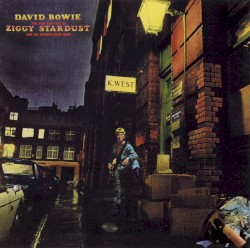
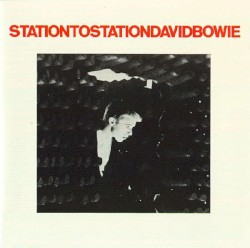

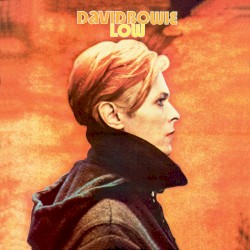
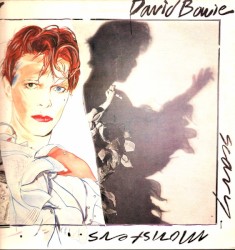
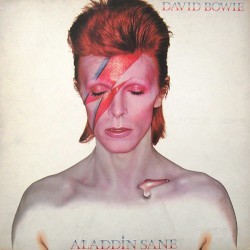
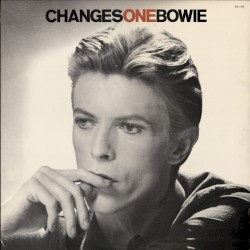

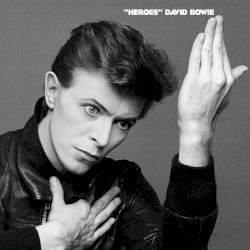
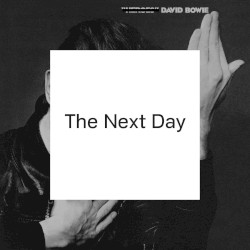
大卫·鲍伊 的其他歌(本站收录)
- 英雄大卫·鲍伊 · 1977
- Life on Mars?大卫·鲍伊 · 1971
- 太空怪谈大卫·鲍伊 · 1969
- Young Americans大卫·鲍伊 · 1975
- Station to Station大卫·鲍伊 · 1976
风格、年代相近的歌
- Solsbury Hill彼得·盖布瑞尔 · 1977
- 波希米亚狂想曲皇后乐团 · 1975
- September Gurls巨星 · 1974
- You Are the Sunshine of My Life史提夫·汪达 · 1973
- Tiny Dancer艾尔顿·强 · 1972
- 想象约翰·列侬 · 1971
- It's Too Late卡洛尔·金 · 1971
- 失去你哈利·尼尔森 · 1971
- 你的歌艾尔顿·强 · 1970
- The Tears of a Clown奇迹乐队 · 1970
- Sunday Mornin' Comin' Down克里斯·克里斯托弗森 · 1970
- Hey Jude披头士乐队 · 1968