乐单
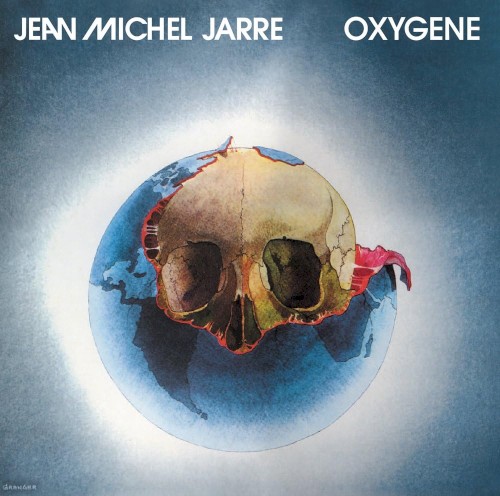
曲目
- A1Oxygène, Part I7:40
- A2Oxygène, Part II8:20
- A3Oxygène, Part III2:50
- B1Oxygène, Part IV3:50
- B2Oxygène, Part V11:10
- B3Oxygène, Part VI5:55
6 首 · 约 40 分钟 · 依据 1976 US 发行的版本,在 MusicBrainz 看这个版本。
介绍
这个词条没有中文维基百科条目,下面是英文维基百科的原文。
Oxygène (French pronunciation: [ɔksiˈʒɛn], English: Oxygen) is the third studio album by French electronic musician and composer Jean-Michel Jarre. It was first released in France in December 1976 by Disques Motors, and distributed internationally in 1977 by Polydor Records. Jarre recorded the album in a makeshift studio that he set up in his apartment in Paris, using a variety of analog and digital synthesizers, and other electronic instruments and effects.
French sound engineer Michel Geiss helped Jarre in the purchase, recording and programming of some instruments used on the album. Jarre's musical style was influenced by musique concrète, developed by Pierre Schaeffer. The album was supported by two singles, "Oxygène (Part II)" and "Oxygène (Part IV)". Following the international success of the latter, the album became Jarre's breakthrough, reaching number one on the French Albums Charts. It was inspired by the track "Popcorn" by German-American electronic composer Gershon Kingsley.
Oxygène has been described as the album that "led the synthesizer revolution of the Seventies" and "an infectious combination of bouncy, bubbling analog sequences and memorable hook lines". The album influenced later artists such as Moby and Brian Canham of Pseudo Echo. In 1978, it would be followed by Equinoxe and in 1979, Jarre held an open-air concert at the Place de la Concorde, causing the sales of both albums to increase, reaching worldwide figures of 15 million copies. As of 2016 it had sold an estimated 18 million copies and is one of the best-selling French, electronic and instrumental albums in history.
Background
In 1967 Jarre travelled to London to sell his electric guitar and amplifier to be able to buy his first synthesizer, an EMS VCS 3 (one of the first units of the instrument), which he used on many of his subsequent albums. He also played guitar in a band called The Dustbins and mixed instruments including the electric guitar and the flute with tape effects and other sounds. Jarre began working with early analogue synthesizers and tape loops in 1968, and in 1969 he joined the Groupe de Recherches Musicales (lit. 'musical research group'), founded and led by Pierre Schaeffer, who developed musique concrete, a type of music composition that is mainly based on the use of pre-recorded sounds, originating the concept of sampling. That same year he mixed the harmony, synthesizers and tape effects to record his debut single "La Cage/Erosmachine". In 1971, he left the institution and dedicated himself to designing Triangle's electronic sound effects; he also went to the Pathé-Marconi record company to release it. Jarre had also done production work for some rock artists, earning enough to set up a small makeshift recording studio in the kitchen of his apartment on 12 Rue de la Trémoille, near the Champs-Élysées in Paris. Initially it included very basic equipment consisting of a few guitar pedals, a Farfisa organ, the EMS VCS 3, and an EMS Synthi AKS; these last two were linked to two Revox tape machines.
One of Schaeffer's former students and artistic director of Disques Motors, Hélène Dreyfus convinced her husband, Francis Dreyfus, to hire Jean-Michel as an employee of his record label. Initially Francis offered Jarre a job as a copyright administrator, however he opted to sign an exclusive songwriting and recording contract. In 1972, the American synth-pop band Hot Butter released a successful version of Gershon Kingsley's "Popcorn". Jarre in that same year released his respective cover version under the pseudonyms Pop Corn Orchestra and Jammie Jefferson. Although unsuccessful, the track would serve as an inspiration for his most successful single, "Oxygène (Part IV)".
Their first two albums as well as their previous single were recorded on the label, Disques Motors, however they were not published there. Jarre released on Sam Fox Productions his debut experimental album Deserted Palace intended to be used in films and on television. It was created using the VCS 3 and RMI Keyboard Computer. In 1973 he composed the soundtrack for the French drama film Les Granges Brûlées (English: The Burned Barns). In its beginnings in the label, he was mainly dedicated to writing music and lyrics for other artists inside and outside the label from 1972 to 1975. The royalties received by Jean-Michel during his collaborations with Françoise Hardy, Gérard Lenorman and Patrick Juvet allowed him to purchase the ARP 2600, used in several of his collaborations with the French singer Christophe and solo works.
正文摘自英文维基百科「Oxygène」,按 CC BY-SA 4.0 使用;删去了参考文献、外部链接、表格和图片;篇幅所限只节选了前面一部分,全文见原条目。
资料卡
- 作品性质
- 音乐专辑
- 表演者
- 让-米歇尔·雅尔
- 发行日期
- 1976 年 12 月 5 日、1977 年
- 流派
- 电子音乐、电子、新世纪音乐、氛围音乐、放松音乐
- 语言
- 没有该语言的内容
- 唱片公司
- Disques Dreyfus
- 制作人
- 让-米歇尔·雅尔
资料来自 Wikidata Q15661(CC0)。
制作名单
- 厂牌
- Polydor(目录号 PD-1-6112)
- 录音室
- 混音:Gang Studios(Paris);录音:JM Jarre's Studio(Paris)
制作
- 工程师
- Patrick Foulon、Jean-Pierre Janiaud(第 A1 首)
- 混音
- Jean-Pierre Janiaud
- 制作人
- 让-米歇尔·雅尔
- 助理工程师
- Patrick Pelamourgues(第 A1、B1 首)、Patrick Foulon(第 A1 首)
- 助理制作人
- PsychNerD(第 A1、B1 首)
- 剪辑
- Francis Dreyfus(第 A1 首)
演奏与演唱
- 合成器
- 让-米歇尔·雅尔
- 演出
- 让-米歇尔·雅尔(第 A1 首)
词曲与编曲
- 作曲
- 让-米歇尔·雅尔
名单来自 MusicBrainz(CC0)这一发行版本的关系数据,由志愿者录入,不一定齐全。
更多资料与乐评
在哪听
让-米歇尔·雅尔 的其他专辑
艺人页 ›
相似的专辑
同在 1976 年发行