 乐单
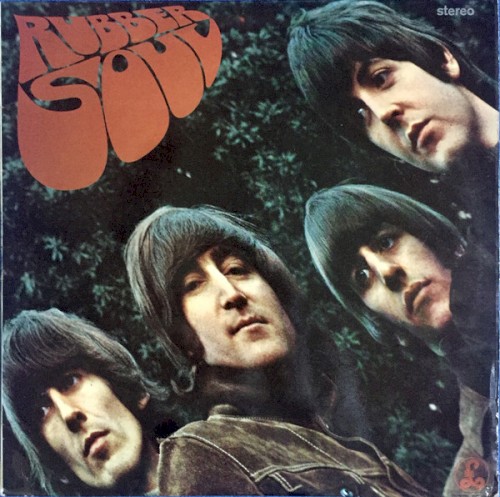
Michelle (1965)
介绍
这个词条没有中文维基百科条目,下面是英文维基百科的原文。
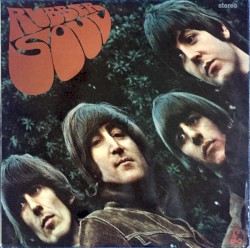
"Michelle" is a song by the English rock band the Beatles from their 1965 album Rubber Soul. It was composed principally by Paul McCartney, with the middle eight co-written with John Lennon. The song is a love ballad with part of its lyrics sung in French.
Following its inclusion on Rubber Soul, the song was released on an EP in France and in New Zealand, and as a single in several other European countries, in early 1966. It was a number 1 hit for the Beatles in Belgium, France, Italy, the Netherlands, Norway and New Zealand. Concurrent recordings of the song by David and Jonathan and the Overlanders were similarly successful in North America and Britain, respectively. "Michelle" won the Grammy Award for Song of the Year in 1967 and has since become one of the most widely recorded of all Beatles songs.
Composition
The instrumental music of "Michelle" originated separately from the lyrical concept. According to McCartney:
"Michelle" was a tune that I'd written in Chet Atkins' finger-picking style. There is a song he did called "Trambone" with a repetitive top line, and he played a bass line while playing a melody. This was an innovation for us; even though classical guitarists had played it, no rock 'n' roll guitarists had played it. The first person we knew to use finger-picking style was Chet Atkins ... I never learned it. But based on Atkins' "Trambone", I wanted to write something with a melody and a bass line in it, so I did. I just had it as an instrumental in C.
The words and style of "Michelle" have their origins in the popularity of Parisian Left Bank culture during McCartney's Liverpool days. In his description, "it was at the time of people like Juliette Greco, the French bohemian thing." McCartney had gone to a party of art students where a student with a goatee and a striped T-shirt was singing a French song. He soon wrote a farcical imitation to entertain his friends that involved French-sounding groaning instead of real words. The song remained a party piece until 1965, when John Lennon suggested he rework it into a proper song for inclusion on Rubber Soul.
McCartney asked Jan Vaughan, a French teacher and the wife of his old friend Ivan Vaughan, to come up with a French name and a phrase that rhymed with it. McCartney said: "It was because I'd always thought that the song sounded French that I stuck with it. I can't speak French properly so that's why I needed help in sorting out the actual words."
Vaughan came up with "Michelle, ma belle", and a few days later McCartney asked for a translation of "these are words that go together well", rendered, for scansion, as sont des mots qui vont très bien ensemble ("are words that go very well together"). When McCartney played the song for Lennon, Lennon suggested the "I love you" bridge. Lennon was inspired by a song he heard the previous evening, Nina Simone's version of "I Put a Spell on You", which used the same phrase but with the emphasis on the last word, "I love you".
Each version of this song has a different length. The UK mono mix is 2:33 whereas the stereo version extends to 2:40 and the US mono is 2:43. The version available in The Beatles: Rock Band has a running time of 2:50.
Musical structure
The song was initially composed in C, but was played in F on Rubber Soul (with a capo on the fifth fret). The verse opens with an F major chord ("Michelle" – melody note C) then the second chord (on "ma belle" – melody note D♭) is a B♭7♯9 (on the original demo in C, the second chord is a F7♯9). McCartney called this second chord a "great ham-fisted jazz chord" that was taught to them by Jim Gretty who worked at Hessey's music shop in Whitechapel, central Liverpool and which George Harrison uses (as a G♭7♯9) (see Dominant seventh sharp ninth chord) as the penultimate chord of his solo on "Till There Was You". After the E♭6 (of "these are words") there follows an ascent involving different inversions of the D dim chord. These progress from A♭dim on "go" – melody note F, bass note D; to Bdim (C♭dim) on "to" – melody note A♭, bass note D; to Ddim on "ge ..." – melody note B (C♭) bass note B; to Bdim on ... "ther ..." – melody note A♭ bass note B, till the dominant (V) chord (C major) is reached on "well" – melody note G bass note C.
George Martin, the Beatles' producer, recalled that he composed the melody of the guitar solo, which is heard midway through the song and again during the fadeout. He showed Harrison the notes during the recording session and then accompanied the guitarist (on piano, out of microphone range) when the solos were overdubbed. In terms of its complementary role to the main melody, musicologist Walter Everett likens this guitar part to two musical passages that Martin had arranged for singer Cilla Black the previous year: a bassoon–English horn combination on "Anyone Who Had a Heart" and the baritone electric guitar on "You're My World".
正文摘自英文维基百科「Michelle (song)」,按 CC BY-SA 4.0 使用;删去了参考文献、外部链接、表格和图片;篇幅所限只节选了前面一部分,全文见原条目。
资料卡
- 作品性质
- 音乐作品/乐曲
- 表演者
- 披头士乐队
- 发行日期
- 1965 年 12 月 3 日
- 收录于 / 属于
- Rubber Soul
- 流派
- 流行音乐
- 语言
- 英语
- 作曲
- 保罗·麦卡特尼、约翰·列侬
- 作词
- 保罗·麦卡特尼、约翰·列侬
资料来自 Wikidata Q1353749(CC0)。
制作名单
- 录音室
- 混音:Abbey Road Studios: Room 65(Westminster);录音:Abbey Road Studios: Studio 2(St John's Wood)
- ISRC
- GBAYE0600382、GBAYE0601485、GBAYE0900807
制作
- 工程师
- Jerry Boys、Ken Scott、Norman Smith
- 制作人
- 乔治·马丁
演奏与演唱
- 原声吉他
- 乔治·哈里森、约翰·列侬、保罗·麦卡特尼
- 电吉他
- 乔治·哈里森
- 电贝斯
- 保罗·麦卡特尼
- 鼓
- 林哥·史达
- 和声
- 乔治·哈里森、约翰·列侬、保罗·麦卡特尼
- 主唱
- 保罗·麦卡特尼
词曲与编曲
- 词曲
- 约翰·列侬、保罗·麦卡特尼
名单来自 MusicBrainz(CC0)这条录音的关系数据,由志愿者录入,不一定齐全。
更多资料
在哪听
披头士乐队 的专辑
艺人页 ›
披头士乐队 的其他歌(本站收录)
- Strawberry Fields Forever披头士乐队 · 1967
- I Want to Hold Your Hand披头士乐队 · 1963
- A Day in the Life披头士乐队 · 1967
- Yesterday披头士乐队 · 1965
- Hey Jude披头士乐队 · 1968
- In My Life披头士乐队 · 1965
- Something披头士乐队 · 1969
- 顺其自然披头士乐队 · 1970
- 她爱著你披头士乐队 · 1963
- Eleanor Rigby披头士乐队 · 1966
- 便士巷披头士乐队 · 1967
- Help!披头士乐队 · 1965
风格、年代相近的歌
- Up, Up and Away第五次元合唱团 · 1967
- 月河Henry Mancini Orchestra · 1960