 乐单
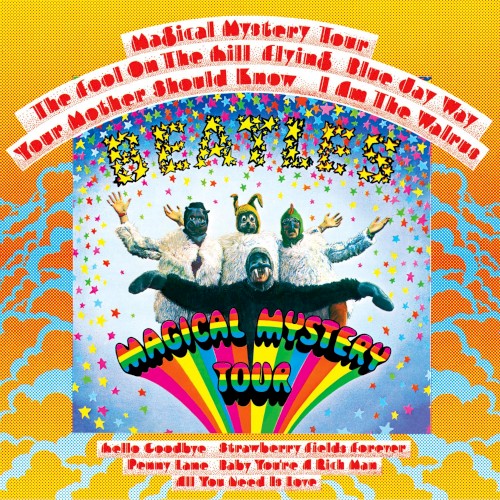
便士巷 (1967)
介绍
这个词条没有中文维基百科条目,下面是英文维基百科的原文。
"Penny Lane" is a song by the English rock band the Beatles that was released as a double A-side single with "Strawberry Fields Forever" in February 1967. It was written primarily by Paul McCartney and credited to the Lennon–McCartney songwriting partnership. The lyrics refer to Penny Lane, a street in Liverpool, and make mention of the sights and characters that McCartney recalled from his upbringing in the city.
The Beatles began recording "Penny Lane" in December 1966, intending it as a song for their album Sgt. Pepper's Lonely Hearts Club Band. Instead, after it was issued as a single to satisfy record company demand for a new release, the band adhered to their policy of omitting previously released singles from their albums. The song features numerous modulations that occur mid-verse and between its choruses. Session musician David Mason played a piccolo trumpet solo for its bridge section.
"Penny Lane" was a top-five hit across Europe and topped the US Billboard Hot 100. In Britain, it was the first Beatles single since "Please Please Me" in 1963 to fail to reach number 1 on the Record Retailer chart. In November 1967, "Penny Lane" was included on the US Magical Mystery Tour album. In 2021, Rolling Stone ranked the track at number 280 on its list of the "500 Greatest Songs of All Time". In 2006, Mojo ranked the song at number 9 of "The 101 Greatest Beatles Songs".
In 2011, the song was inducted into the Grammy Hall of Fame.
Background and inspiration
Penny Lane is a road in the south Liverpool suburb of Mossley Hill. The name also applies to the area surrounding its junction with Smithdown Road and Allerton Road, and to the roundabout at Smithdown Place that was the location for a major bus terminus, originally an important tram junction of Liverpool Corporation Tramways. The roundabout was a frequent stopping place for John Lennon, Paul McCartney and George Harrison during their years as schoolchildren and students. Bus journeys via Penny Lane and the area itself subsequently became familiar elements in the early years of the Lennon–McCartney songwriting partnership. In 2009, McCartney reflected:
"Penny Lane" was kind of nostalgic, but it was really [about] a place that John and I knew [...] I'd get a bus to his house and I'd have to change at Penny Lane, or the same with him to me, so we often hung out at that terminus, like a roundabout. It was a place that we both knew, and so we both knew the things that turned up in the story.
Lennon's original lyrics for "In My Life" had included a reference to Penny Lane. Soon after the Beatles recorded "In My Life" in October 1965, McCartney mentioned to an interviewer that he wanted to write a song about Penny Lane. A year later, he was spurred to write the song once presented with Lennon's "Strawberry Fields Forever". McCartney also cited Dylan Thomas's nostalgic poem "Fern Hill" as an inspiration for "Penny Lane". Lennon co-wrote the lyrics with McCartney. He recalled in a 1970 interview: "The bank was there, and that was where the tram sheds were and people waiting and the inspector stood there, the fire engines were down there. It was reliving childhood."
When I came to write it, John came over and helped me with the third verse, as often was the case. We were writing childhood memories: recently faded memories from eight or ten years before, so it was a recent nostalgia, pleasant memories for both of us. All the places were still there, and because we remembered it so clearly we could have gone on.
—Paul McCartney, Many Years From Now by Barry Miles
Writing for the song took place early in the sessions for what became the Sgt. Pepper's Lonely Hearts Club Band album, which commenced following a three-month period when the Beatles had pursued individual interests. Beatles biographer Ian MacDonald suggested an LSD influence, saying that the lyrical imagery points to McCartney first taking LSD in late 1966. MacDonald concluded that the lyric "And though she feels as if she's in a play / She is anyway" was one of the more "LSD-redolent phrases" in the Beatles' catalogue. Music critics Roy Carr and Tony Tyler similarly described the subject matter as "essentially 'Liverpool-on-a-sunny-hallucinogenic-afternoon'".
正文摘自英文维基百科「Penny Lane」,按 CC BY-SA 4.0 使用;删去了参考文献、外部链接、表格和图片;篇幅所限只节选了前面一部分,全文见原条目。
资料卡
- 作品性质
- 音乐作品/乐曲
- 表演者
- 披头士乐队
- 发行日期
- 1967 年
- 收录于 / 属于
- 奇幻之旅
- 流派
- 巴洛克流行、迷幻流行
- 语言
- 英语
- 唱片公司
- Parlophone、Capitol唱片
- 作曲
- 约翰·列侬、保罗·麦卡特尼
- 作词
- 约翰·列侬、保罗·麦卡特尼
资料来自 Wikidata Q842168(CC0)。
制作名单
- 录音室
- 录音:Abbey Road Studios: Studio 2(St John's Wood);录音:Abbey Road Studios: Studio 3(St John's Wood)
- ISRC
- GBAYE0601641、GBAYE0900723、GBAYE6700028
制作
- 制作人
- 乔治·马丁
演奏与演唱
- 簧风琴
- 保罗·麦卡特尼
- 钢琴
- 保罗·麦卡特尼、约翰·列侬、乔治·马丁
- 铃鼓
- 林哥·史达
- 富鲁格号
- Leon Calvert
- 电吉他
- 乔治·哈里森、约翰·列侬
- 拍手
- 乔治·哈里森、约翰·列侬、保罗·麦卡特尼、林哥·史达
- 电贝斯
- 保罗·麦卡特尼
- 英国管
- Dick Morgan、Mike Winfield
- 鼓
- 林哥·史达
- 康加鼓
- 约翰·列侬
- 小号
- Leon Calvert、Duncan Campbell、Freddy Clayton、Bert Courtley
- 长笛
- Phil Goody、Manny Winters、Ray Swinfield、Dennis Walton
- 短笛
- Phil Goody、Ray Swinfield、David Mason
- 双簧管
- Dick Morgan、Mike Winfield
- 管钟
- 林哥·史达
- 低音提琴
- Frank Clarke
- 短小号
- David Mason
- 主唱
- 约翰·列侬、保罗·麦卡特尼
- 和声
- 保罗·麦卡特尼
词曲与编曲
- 词曲
- 约翰·列侬、保罗·麦卡特尼
名单来自 MusicBrainz(CC0)这条录音的关系数据,由志愿者录入,不一定齐全。
更多资料
在哪听
披头士乐队 的专辑
艺人页 ›
披头士乐队 的其他歌(本站收录)
- Strawberry Fields Forever披头士乐队 · 1967
- I Want to Hold Your Hand披头士乐队 · 1963
- A Day in the Life披头士乐队 · 1967
- Yesterday披头士乐队 · 1965
- Hey Jude披头士乐队 · 1968
- In My Life披头士乐队 · 1965
- Something披头士乐队 · 1969
- 顺其自然披头士乐队 · 1970
- 她爱著你披头士乐队 · 1963
- Eleanor Rigby披头士乐队 · 1966
- Help!披头士乐队 · 1965
- Michelle披头士乐队 · 1965
风格、年代相近的歌
- Tiny Dancer艾尔顿·强 · 1972
- Changes大卫·鲍伊 · 1972
- 想象约翰·列侬 · 1971
- It's Too Late卡洛尔·金 · 1971
- 失去你哈利·尼尔森 · 1971
- 你的歌艾尔顿·强 · 1970
- The Tears of a Clown奇迹乐队 · 1970
- Sunday Mornin' Comin' Down克里斯·克里斯托弗森 · 1970
- Time of the Season僵尸合唱团 · 1968
- A Whiter Shade of Pale普洛柯哈伦 · 1967
- Good Vibrations海滩男孩 · 1966
- 山高水深艾克 & 蒂娜·特内尔 · 1966